Best Brad Point Drill Bit Set

The one-hole moment that ruins a clean woodworking layout
You’re drilling shelf pins, hinge screws, or dowel holes and everything looks lined up… until the bit wanders at the start and your hole lands a hair off.
That tiny miss shows up later as a rocking shelf, a hinge that binds, or a dowel joint that won’t pull tight.
If you’re shopping for the best brad point drill bit set, you’re in the right place—because brad points are built to start on-center in wood, cut a clean rim, and reduce walking compared to general-purpose twist bits.
What this best brad point drill bit set roundup covers
This page breaks down 5 solid sets that cover common home-shop needs, from cabinet work and furniture builds to simple “drill clean holes in wood” tasks.
Disclosure: As an Amazon Associate, DrillAlign may earn from qualifying purchases. This doesn’t change what we recommend.
This roundup focuses on sets that make sense in a real shop, so you get better results without overbuying:
- Cleaner starts for accurate layout work (shelf pins, hardware, dowels)
- Better hole quality in hardwood, plywood, and softwood
- Practical sizes you’ll actually use, with storage that doesn’t fall apart
If you want the basics first, start at Drill Bits hub
Best Brad Point Drill Bit Set (2026): Top 5 Picks
| Image | Product | Best for | Key feature | View on Amazon |
|---|---|---|---|---|
 | Fisch Wave Cutter Brad Point Set (7-Piece, 1/8"–1/2") | Furniture/cabinet work when you want clean, accurate holes | Wave-cut geometry for smoother drilling and reduced tear-out in wood | View on Amazon |
 | DEWALT DW1720 Brad Point Drill Bit Set (20-Piece) | Best “grab-and-go” brad point assortment for general DIY | Common sizes in a compact case for clean starts in wood | View on Amazon |
 | IRWIN Tools 1882793 Brad Point Drill Bit Set (8-Piece) | Budget-friendly woodworking holes and occasional use | Solid size range for pilots/clearance holes without overbuying | View on Amazon |
 | Porter-Cable PC1014 Brad Point Drill Bit Set (14-Piece) | Wood drill bit set for shop tasks with a wider mid-size spread | Practical assortment for cabinetry, jigs, and hardware drilling | View on Amazon |
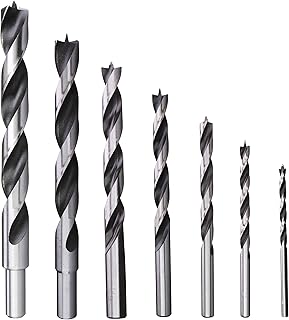 | Fisch Brad Point Drill Bit Set (5-Piece, 3/16"–3/8") | Small “core sizes” you use constantly for pilots, shelf work, and jigs | High-quality common diameters for accurate starts and clean rims | View on Amazon |
1) Fisch Wave Cutter Brad Point Set (7-Piece, 1/8"–1/2") — Best overall for clean, accurate woodworking holes
If you want holes that look “layout-grade,” reach for this set on furniture parts, cabinet work, and jigs.
Watch for: start slow and let the point seat first. Then feed steadily once the spurs are cutting.
Best for: clean holes in hardwood/plywood, accurate starts, and crisp rims
What you’ll like: wave-cut geometry helps the bit cut smoother and can reduce tear-out compared to basic brad points
🧐 Quick verdict: A top “workshop standard” set when you care about clean entry and accurate starts in wood.
| Pros ✅ | Cons ⚠️ |
|---|---|
| ✅ Very clean starts and crisp hole rims in wood | ⚠️ Smaller set count than big “assortment” kits |
| ✅ Great for accurate layout work (shelf pins, hardware, jigs) | |
| ✅ Strong choice when you’re tired of brad point vs twist bits surprises |
Why it’s a top pick: In wood, the difference between “good enough” and “clean and accurate” often happens in the first 1/8" (3 mm) of the hole.
A sharp brad point with clean rim cutters starts where you marked and leaves a nicer edge, especially in plywood and hardwood.
Decision bullets
- Where it shines: cabinetry, furniture parts, shelf pin drilling, and jig building where placement matters.
- Hole quality: cleaner entry and less rim tear-out than a standard twist bit in wood.
- Technique requirement: start slow, keep the drill square, then feed steadily once the spurs score.
- Workholding: clamp your work and use a backer board for through-holes you care about.
- Best for: Woodworking-first drilling where accuracy and clean edges matter.
Shop tip: If you’re still deciding between brad point vs twist bits, read this before you buy another “general purpose” set: brad point vs twist bits
2) DEWALT DW1720 Brad Point Drill Bit Set (20-Piece) — Best for a full-size assortment (general DIY + shop coverage)
A practical brad point assortment when you want lots of common sizes ready for wood projects and installs.
Watch for: keep the bits organized and don’t force them. Most broken small bits come from side pressure.
Best for: a general-purpose wood drill bit set with brad point starts
What you’ll like: wide size coverage for pilot holes, clearance holes, and hardware drilling
🧐 Quick verdict: Best when you want one case that covers most household and shop wood drilling without hunting for single bits.
| Pros ✅ | Cons ⚠️ |
|---|---|
| ✅ Lots of sizes for real-world DIY and woodworking tasks | ⚠️ Big assortments can include sizes you rarely touch |
| ✅ Cleaner starts in wood than standard twist-bit kits | |
| ✅ Handy “shop coverage” set for pilots, hardware, and jigs |
If you do a mix of home projects and shop builds, an assortment set is convenient because you stop “making do” with the wrong size.
That matters with brad point bits, because the right diameter helps you avoid sloppy pilots, split wood, and hardware that won’t seat correctly.
Why it’s a top pick: It’s a straightforward way to get brad point performance across many sizes in one box, so you get solid coverage for pilots, clearance holes, and common woodworking layouts.
Decision bullets
- Where it shines: general DIY, woodworking installs, shop jigs, and “I need the right size now” moments.
- How to get best results: start slow, keep the drill square, and let the spurs score before you feed.
- Material fit: best in wood (hardwood/softwood/plywood). For plastics, go slower and clear chips often.
- Workholding: clamp the work; brad points start clean, but they still follow the angle you drill at.
- Best for: A do-it-all brad point assortment for wood drilling.
3) IRWIN Tools 1882793 Brad Point Drill Bit Set (8-Piece) — Best budget-first brad point set (still a real upgrade over twist bits)
A sensible starter set when you want cleaner holes in wood without going deep into “premium bit” territory.
Watch for: don’t overheat the bit. Back out to clear chips on deeper holes.
Best for: pilots/clearance holes, basic joinery layout, and home repairs in wood
What you’ll like: brad point starts reduce walking compared to twist bits on wood grain
🧐 Quick verdict: Best budget pick when you want a noticeable improvement in start accuracy over a standard twist-bit kit.
| Pros ✅ | Cons ⚠️ |
|---|---|
| ✅ Good “first brad point set” for wood drilling | ⚠️ Not the cleanest rim cut compared to higher-end bits |
| ✅ Covers common sizes for pilots and general shop holes | |
| ✅ Better starts than twist bits on grain and plywood veneers |
If you drill wood occasionally and you mainly want to stop bits from skating, a basic brad point set can be the right move.
It won’t replace good technique, but it makes accurate starts easier than a typical twist-bit assortment.
Why it’s a top pick: It’s a practical entry point into brad point bits without buying a massive kit or specialty sizes you won’t use.
Decision bullets
- Where it shines: home repairs, brackets, simple shelves, and light woodworking.
- How to get cleaner holes: use a backer board and avoid punching through at full speed.
- When to upgrade: if you’re doing fine cabinetry/furniture and you care about tear-out and rim quality.
- Best for: Occasional shop use where you still want brad point starts.
Quick win: If your holes still look rough, check the bit type and match it to the job: drill bit types explained
4) Porter-Cable PC1014 Brad Point Drill Bit Set (14-Piece) — Best mid-size coverage for shop tasks (jigs, hardware, cabinet parts)
A nice middle-ground set when you drill a lot of “shop sizes” and want brad point starts for cleaner layout work.
Watch for: in plywood, keep the feed steady. Pausing mid-cut can fuzz the rim.
Best for: jig building, cabinet hardware, and general wood drilling in common diameters
What you’ll like: practical spread of sizes without the bulk of huge sets
🧐 Quick verdict: Best for a shop that drills a lot of common mid-range holes and wants cleaner starts in wood.
| Pros ✅ | Cons ⚠️ |
|---|---|
| ✅ Strong “daily driver” size spread for wood projects | ⚠️ Not as specialized as premium woodworking-focused sets |
| ✅ Good for jigs, hardware, and general cabinet drilling | ⚠️ Still needs a backer for clean exits on through-holes |
| ✅ Less clutter than oversized assortments |
This is the kind of set that lives in a shop drawer: not too huge, not too limited.
If you’re drilling hardware holes, jig holes, and general woodworking pilots, the mid-size coverage is what keeps you moving.
Why it’s a top pick: A “right-sized” brad point set often gets used more than a giant kit, because you can find the bit fast and the sizes match typical woodworking tasks.
Decision bullets
- Where it shines: cabinet parts, shop fixtures, jigs, and hardware installs.
- Hole quality: brad point rim scoring helps reduce splintering on entry in wood.
- Technique note: for clean exits, drill into a backer board or stop just short and finish from the back.
- Best for: A practical wood drill bit set for regular shop use.
Learn the basics: If you’re trying to choose the right bit for each job (not just brad points), start here: drill bit types explained
5) Fisch Brad Point Drill Bit Set (5-Piece, 3/16"–3/8") — Best compact “core sizes” set (the bits you reach for most)
If you mostly drill a handful of common sizes, this compact set earns a permanent spot on the bench.
Watch for: choose the right pilot size. Too small can split wood, but too big can strip screws.
Best for: pilots, clearance holes, and jig holes in the most-used woodworking diameters
What you’ll like: high-quality common sizes without paying for a bunch of rarely used diameters
🧐 Quick verdict: Best “small but serious” set when you want clean starts in the sizes you use constantly.
| Pros ✅ | Cons ⚠️ |
|---|---|
| ✅ Focuses on the sizes most people drill in wood | ⚠️ Not a full assortment if you need tiny and large sizes |
| ✅ Great for accurate pilots and jig holes | ⚠️ You may still want a separate small-bit set for 1/16"–1/8" work |
| ✅ Compact, easy to keep near the drill |
Big kits are convenient, but most shops live on a few sizes.
A compact “core sizes” set is what you grab for pilots, shelf work, and jig holes—especially when you want the brad point to land exactly on your mark.
Why it’s a top pick: You get the brad point benefits (clean starts, cleaner rims) in the sizes that show up constantly in woodworking and DIY.
Decision bullets
- Where it shines: pilots for wood screws, jig holes, shelf work, and general shop drilling.
- How to keep holes clean: clamp a backer board and ease up at breakthrough.
- Best for: Compact, high-use brad point drilling in wood.
For a deeper explanation of why these start cleaner than twist bits: brad point vs twist bits
How we choose
For a brad point buying guide that actually helps in a home shop, we focus on what changes results in wood:
- Start accuracy (does the point seat and resist walking?)
- Rim cut quality (cleaner edges = less sanding and less chip-out)
- Size selection (useful diameters vs filler sizes)
- Real-world versatility (hardwood, softwood, plywood, MDF)
- Storage and organization (if the case is a mess, the set won’t get used)
Don’t buy the wrong brad point set
Don’t buy this if…
- You mainly drill metal. Brad point bits are designed for wood, so use metal-cutting bits for metal.
- You expect any set to prevent tear-out on the exit side without a backer board. Through-holes still need support.
- You want one kit to do everything (wood, masonry, tile). Build a small set of purpose-built bits instead.
Buy this if…
- You want cleaner, more accurate holes in wood for cabinetry, furniture, and DIY installs.
- You’re tired of bit walking and off-center starts, especially on plywood and hardwood.
- You want a wood drill bit set that makes layout work (shelf pins, hardware, dowels) more predictable.
Buyer’s guide: how to choose a drill guide that actually drills straight
What brad point bits do better than twist bits
In wood, brad point bits are built for control at the start of the hole:
- Center point helps the bit seat on your mark instead of skating
- Outer spurs score the rim for a cleaner edge
- Cleaner entry means less fuzzing and less chip-out on plywood veneers
If you want the full breakdown (and when twist bits are still the right call): brad point vs twist bits
Set size: small “core sizes” vs big assortments
Most people end up in one of these two patterns:
- Core sizes set
Best if you drill the same few diameters constantly (pilots, jigs, shelf work). Less clutter, faster selection. - Assortment set
Best if you do varied DIY and want “the right size” available without buying singles.
If you’re unsure, list the holes you drill most (pilot holes, shelf pins, dowels, hardware) and pick the set that covers those first.
Clean holes in plywood: backers, feed rate, and breakout
Brad point bits help, but plywood still needs the right setup:
- Backer board: clamp a scrap tight behind the work to prevent blowout.
- Start slow: let the spurs score the rim before you feed.
- Don’t punch through: ease up as you break through to keep the exit clean.
If you’re building your “bit basics” knowledge from scratch, this overview helps you pick the right bit type every time: drill bit types explained
Brad point buying guide: quick compatibility checks
Before you buy a set, check these so it fits how you actually drill:
- Chuck size: make sure your drill can hold the largest shanks in the set (especially if you’re using a compact driver).
- Common hole sizes: match the set to your real tasks (shelf pins, dowels, pilots, hardware).
- Drill guide use: if you drill with a guide, brad points are a strong match because they start clean and track well.
- Sharpening plan: if you drill a lot, decide whether you’ll replace singles or sharpen as needed.
Troubleshooting table: problem → cause → fix
| Problem you see | Likely cause | Fix that works in a real shop |
|---|---|---|
| Bit walks off your mark at the start | Starting too fast; no center mark; dull point | Make an awl mark, start slow for the first 1/8" (3 mm), and use a sharper brad point |
| Fuzzy or splintered rim around the entry | Dull spurs; wrong bit type for wood | Switch to a sharper brad point bit; score a knife line for delicate veneer |
| Blowout on the exit side | No backer board; punching through at full feed | Clamp a backer tight and ease up as you break through |
| Hole looks oversized or sloppy | Wobble from a loose chuck; forcing the bit; wrong size choice | Tighten the chuck properly, let the bit cut, and verify you’re using the correct diameter |
| Burning in hardwood | Too slow RPM with heavy pressure; chips not clearing | Increase speed moderately, reduce pressure, and back out to clear chips |
| Plywood veneer chips around the hole | Unsupported fibers; dull spurs | Use painter’s tape + backer board; start slow to score the rim |
| Small bits snapping | Side-loading; work shifting | Clamp the work, drill straight, and avoid “steering” the drill mid-hole |
| Dowel holes not lining up | Inconsistent reference face; layout drift | Register from one face, use a stop, and transfer locations with dowel centers |
For a deeper bit-selection walkthrough: drill bit types explained
Common mistakes and quick wins (shop-pro tips)
Quick wins that instantly improve brad point holes
- Start slow until the point and spurs seat.
- Use a backer for any through-hole you care about.
- Clear chips on deeper holes (especially in hardwood and MDF).
- Clamp the work so you’re not fighting movement while trying to stay on your mark.
Common mistakes
- Using brad point bits like they’re “self-centering” without a clear mark.
- Forcing the drill. Clean holes come from sharp bits and steady feed, not muscle.
- Skipping the backer board, then blaming the bit for exit blowout.
If you’re still unsure which bit style fits your job, the comparison guide clears it up fast: brad point vs twist bits
FAQs
1) What’s the best brad point drill bit set for woodworking?
If you care most about clean holes and accurate starts in wood, choose a woodworking-focused brad point set with sharp rim cutters (spurs) and the sizes you actually drill most.
2) Are brad point bits better than twist bits?
In wood, brad point bits usually start more accurately and cut a cleaner rim than twist bits. However, twist bits can still work for rough drilling and are more general-purpose across materials. Full breakdown: brad point vs twist bits
3) Do I need a huge brad point assortment?
Not always. Many shops use a handful of sizes constantly, so a compact “core sizes” set can get used more. But if you do varied DIY, an assortment is convenient.
4) What’s the best way to prevent tear-out in plywood?
Use a sharp brad point bit, start slow to score the rim, and clamp a backer board tight behind the work. Then ease up as you break through.
5) Can brad point bits drill MDF?
Yes. MDF makes fine dust and packs chips, so clear chips often and avoid overheating. A backer board also helps keep the exit cleaner on through-holes.
6) Can I use brad point bits in a drill guide?
Yes—brad point bits are a great match for drill guides because they start cleanly and track well in wood. For best results, clamp the work and stabilize the guide.
7) Why do my brad point holes still come out slightly off?
Most often, the drill wasn’t square, the work shifted, or you started too fast and the point didn’t seat. Clamp better, start slower, and use an awl mark on your layout point.
8) What sizes matter most in a wood drill bit set?
It depends on your work. Most DIY and woodworking drilling centers around pilot holes for screws, common hardware sizes, and a few jig/shelf-related diameters. Make a quick list of the holes you drill most and match the set to that list.
9) Where can I learn the different drill bit types?
Start here: drill bit types explained
Conclusion: which brad point set should you buy?
If you want the most reliable “shop standard” pick, go with the Fisch Wave Cutter set (Pick #1) for clean, accurate woodworking holes.
If you want broad coverage in one case for general DIY, the DEWALT DW1720 set (Pick #2) is the easy grab-and-go choice.
If you’re shopping budget-first but still want better starts than twist bits, the IRWIN set (Pick #3) is a practical entry point.
For a right-sized shop assortment that fits common jig/hardware work, the Porter-Cable set (Pick #4) is a solid middle ground.
And if you mostly drill a handful of common diameters, the compact Fisch set (Pick #5) keeps your most-used brad point bits close at hand.
For more drill-bit roundups and how-to guides, visit: Drill Bits hub
Related reading
- Brad Point vs Twist Bits: Which to Use (Coming soon)
- How to Drill Straight Holes Without a Drill Press
- Forstner Bits: How to Drill Clean Flat-Bottom Holes
- Best Drill Guide (2026)
- Best Shelf Pin Jig